Device technology rarely stands still for long.
Organizations may standardize on a specific tablet, handheld computer, laptop, or mobile device today, only to find that the next hardware refresh introduces a new form factor, different power requirements, or updated connectivity standards.
USB-C has changed the way many devices connect, charge, and transfer data, and the standard continues to evolve. Newer USB specifications support faster data transfer, higher power delivery, and more capable peripherals through the USB-C connector many devices already use.
For organizations managing shared or enterprise device fleets, that makes one question increasingly important:
Is your device infrastructure ready to evolve along with your devices?
USB-C Is a Connector, Not a Guarantee
One of the advantages of USB-C is its versatility. The same compact connector can support charging, data transfer, display output, and other functionality.
But identical-looking USB-C ports do not necessarily provide identical capabilities.
Depending on the device, cable, power source, and USB specification being used, performance can vary considerably. Newer USB standards continue to expand the bandwidth and power USB-C connections can support.
That means organizations planning charging and syncing infrastructure need to think beyond whether a device simply “has USB-C.”
The better question is whether the infrastructure can accommodate changing requirements over the life of the deployment.
Device Refreshes Shouldn’t Require Infrastructure Refreshes
Mobile devices typically have a much shorter lifecycle than the infrastructure surrounding them.
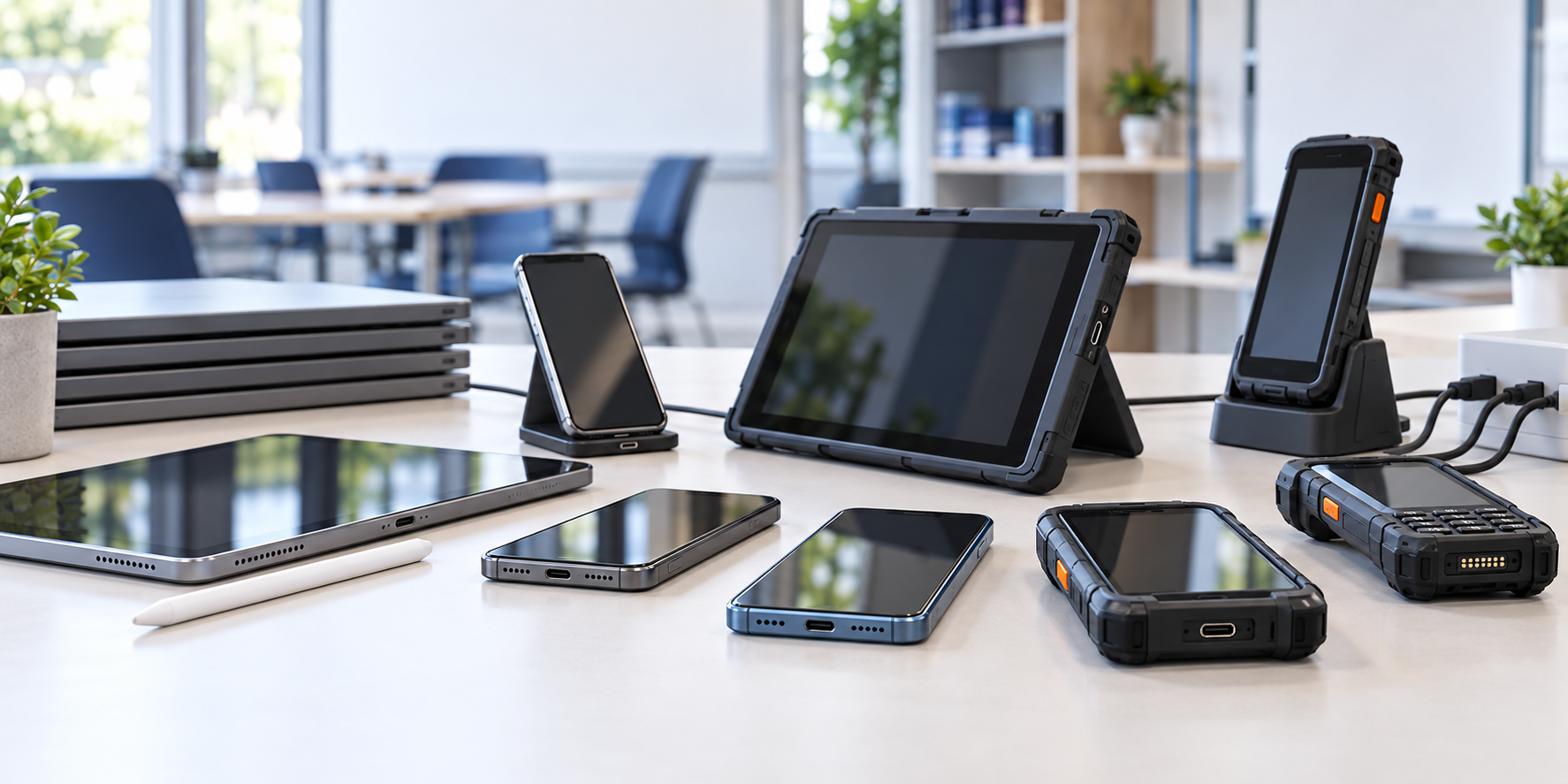
A school district may replace tablets or Chromebooks. A healthcare organization may upgrade its clinical handhelds. A warehouse may transition to a new generation of scanners. A retailer may introduce new mobile POS devices.
In each case, replacing the device itself is only part of the transition.
If charging carts, cabinets, docks, cables, connectors, and device-management workflows are designed around one specific device generation, a hardware refresh can create an unexpected second project: replacing or modifying the infrastructure supporting it.
A more flexible approach separates the lifespan of the device from the lifespan of the infrastructure.
Instead of designing around one device, organizations can choose adaptable infrastructure that supports multiple device types, connector configurations, and future upgrades.
Plan for Mixed Device Environments
Technology transitions rarely happen all at once.
During a refresh cycle, an organization may have older devices and newer USB-C devices operating side by side. Different departments may also use entirely different hardware while relying on the same IT team and support infrastructure.
That makes flexibility particularly valuable.
Charging and syncing systems that can be configured for different devices give organizations more options as fleets evolve. Rather than maintaining separate infrastructure for every device model, IT teams can create a more consistent process for storing, charging, syncing, and deploying equipment.
This can also make pilot programs and phased rollouts easier. New hardware can be introduced without requiring an immediate replacement of every supporting system around it.
Look Beyond Today’s Power Requirements
Power is another important part of future planning.
USB Power Delivery has expanded significantly, allowing USB-C connections to support much higher levels of power than earlier USB implementations. As mobile devices become more capable, their power requirements and expected charging speeds may continue to change.
Infrastructure designed only around the minimum requirements of today’s fleet can become a limitation tomorrow.
Planning for appropriate power capacity, quality components, and adaptable connections can help prevent newer devices from being limited by older charging infrastructure.
The goal is not necessarily to purchase the highest specification available. It is to choose infrastructure with enough flexibility to accommodate reasonable changes in the devices the organization expects to deploy.
Modularity Creates Options
This is where modular device infrastructure becomes particularly valuable.
Datamation’s UniDock 3.0 Intelligent Charging Station and UniDock Tray 3.0 are designed to support changing device environments. Adjustable device guides, flexible cable management, and interchangeable connectivity options allow organizations to adapt the charging environment as hardware changes rather than replacing the entire system.
That flexibility can support today’s USB-C devices while giving organizations more room to accommodate future device generations, different form factors, and changing connectivity requirements.
It also makes the infrastructure decision less dependent on a single hardware purchase.
Instead of asking, “Will this work with the device we’re buying this year?” organizations can begin asking, “How easily can this adapt to the devices we may be using several years from now?”
That is a more practical approach to long-term technology planning.
Future-Proofing Is Really About Flexibility
No organization can predict exactly what its mobile technology environment will look like five years from now.
Standards will evolve. Devices will become more powerful. Form factors and operational requirements will change.
Future-proofing is not about trying to predict every change.
It is about avoiding infrastructure decisions that lock the organization into what exists today.
By prioritizing modularity, adaptable connectivity, appropriate power capacity, and flexible device support, organizations can build an infrastructure that is easier to update as technology changes.
The devices may be different tomorrow.
The infrastructure supporting them should not have to start over every time they are.
Mobile. Ready.